
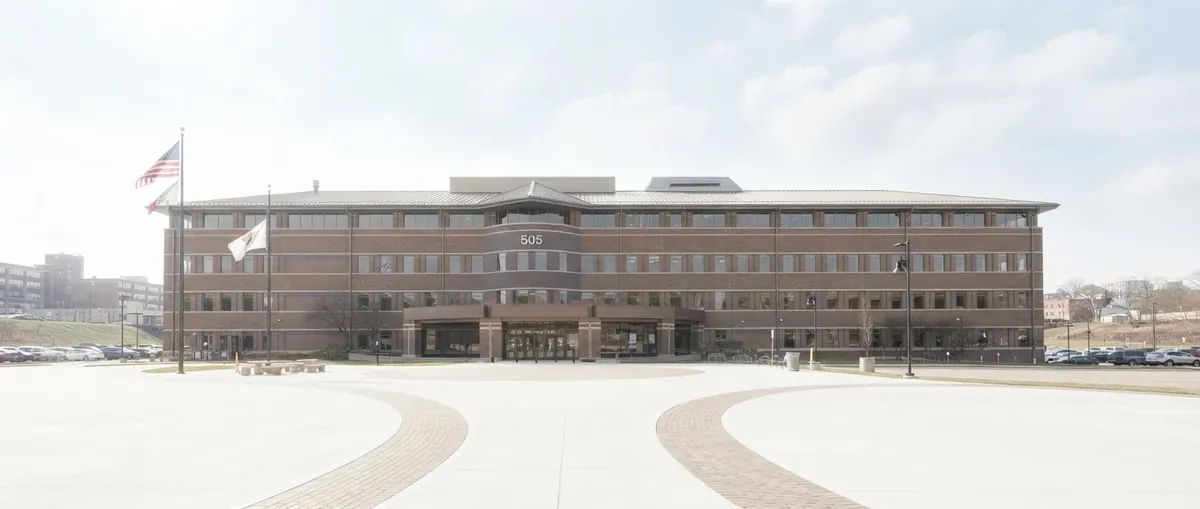
Court records in DuPage County, Illinois, are maintained by the Clerk of the 18th Judicial Circuit Court and can be accessed through online tools, official court portals, and the clerk's office. DuPageCourt.us can help find publicly available court record information for DuPage County. Additional access points include the Circuit Court Clerk's Public Information Application, the DuPage County Circuit Clerk's website, and the 18th Judicial Circuit Court website.
DuPage Court System Overview
DuPage County is served by the 18th Judicial Circuit Court, which falls within Circuit District 3 of the Illinois unified court system. The 18th Judicial Circuit serves DuPage County exclusively — it is a single-county circuit. The Chief Judge of the circuit oversees court administration, judicial assignments, and local rule implementation. The circuit court is a court of general jurisdiction, meaning it handles all categories of cases — criminal, civil, family, probate, juvenile, and traffic — through specialized divisions rather than through separate district and magistrate courts. Associate judges hear many of the same case types as circuit judges, with assignments determined by the Chief Judge.
Courts Serving DuPage
Several courts at the state and federal level serve DuPage County residents:
18th Judicial Circuit Court (State Trial Court)
Circuit Clerk of the 18th Judicial Circuit
Illinois Appellate Court — Second District
Appeals from the 18th Judicial Circuit are heard by the Second District Appellate Court.
U.S. District Court — Northern District of Illinois (Eastern Division)
DuPage County falls within the Northern District of Illinois. Federal civil and criminal cases are heard in Chicago.
Municipal Courts
Illinois does not operate a separate municipal court system. Ordinance violations from DuPage County municipalities are generally adjudicated through the 18th Judicial Circuit Court or through local administrative adjudication hearings, depending on the municipality.
What Types of Cases DuPage Courts Hear
The 18th Judicial Circuit Court handles virtually all case types arising in DuPage County. Cases are organized into specialized divisions:
- Felonies
- Misdemeanors and traffic offenses (including DUI)
- Civil litigation (all dollar amounts)
- Small claims
- Family law — divorce, custody, child support, orders of protection, paternity
- Probate — decedent estates, guardianships, conservatorships
- Juvenile — delinquency, abuse and neglect, truancy
- Adoption and termination of parental rights
- Mental health proceedings
- Tax and eminent domain cases
Each division is described in more detail in the sections that follow.
District Court Cases in DuPage
Illinois uses a unified circuit court system rather than separate district and magistrate courts. In the Felony Division of the 18th Judicial Circuit, circuit judges preside over serious criminal prosecutions — Class X felonies, Class 1 through Class 4 felonies, and first-degree murder cases. Felony cases typically begin when the DuPage County State's Attorney files charges following a grand jury indictment or a preliminary hearing. Cases are assigned to individual judges who manage them from arraignment through trial and sentencing. The court also hears post-conviction petitions, motions to vacate, and other post-judgment criminal matters. Civil cases involving larger dollar amounts and complex litigation — including contract disputes, personal injury, and real estate matters — are heard by circuit judges in the civil division.
Magistrate Court Cases in DuPage
Associate judges in the 18th Judicial Circuit handle many of the functions that magistrate judges perform in other states. The Misdemeanor and Traffic Division hears Class A, B, and C misdemeanors, traffic violations, DUI cases, and ordinance violations. Associate judges also preside over preliminary hearings in felony cases.
Small claims cases — civil disputes involving $10,000 or less under Illinois law — are heard in the civil division by associate judges. Civil cases above the small claims threshold but below more complex litigation levels are also assigned to associate judges. Because DuPage County has a high case volume, associate judges are typically assigned to specific divisions such as traffic, misdemeanor, or small claims to manage the caseload efficiently.
Family Law, Probate, and Juvenile Matters in DuPage
Family Law
The Domestic Relations Division handles divorce (dissolution of marriage), allocation of parental responsibilities (custody), child support, civil orders of protection, paternity, and termination of parental rights. The Illinois Supreme Court has approved standardized forms for divorce, child support, and maintenance that all circuit courts must accept. Certified copies of dissolution of marriage records can be obtained from the circuit clerk in the county where the dissolution was granted.
Probate
The Probate and Guardianship Division oversees decedent estates, guardianships of disabled adults and minors, conservatorships, and trust disputes. Guardianship applications and annual reporting requirements are managed through this division.
Juvenile
Juvenile delinquency cases, abuse and neglect proceedings, and truancy matters are heard in a separate juvenile courtroom. Juvenile court records are confidential under Illinois law and are not available through the public case lookup system. Contact the Circuit Clerk's office directly for questions about access to juvenile records.
How Cases Move Through the DuPage Court System
- Filing / Initiation: Criminal cases begin with a complaint or indictment filed by the State's Attorney. Civil cases start when a plaintiff files a complaint. Family and probate matters are initiated by petition.
- Case Assignment: The Circuit Clerk assigns each case a number and it is allocated to a judge within the appropriate division.
- Initial Hearing: In criminal cases, the defendant is arraigned and enters a plea. In civil cases, a scheduling conference sets deadlines for discovery and motions.
- Pre-Trial Phase: Parties exchange evidence through discovery, file motions, and may engage in plea negotiations (criminal) or settlement discussions (civil).
- Trial or Resolution: Cases proceed to a bench or jury trial, or are resolved by plea agreement, settlement, default judgment, or dismissal.
- Post-Judgment: Criminal cases may involve sentencing, probation, or appeals. Civil cases may involve enforcement of judgments or post-trial motions. Appeals go to the Second District Appellate Court.
Court Administration, Local Rules, and Public Access in DuPage
The Chief Judge of the 18th Judicial Circuit administers court operations, assigns judges to divisions, and issues administrative orders. The Trial Court Administrator supports day-to-day management. Contact the court administration office at the 18th Judicial Circuit Court at 630-407-8904 for administrative inquiries.
Local court rules for the 18th Judicial Circuit govern filing procedures, motion practice, and courtroom conduct. These rules are available through the court's website. The Office of the Illinois Courts also publishes statewide rules and public resources explaining court access policies.
Public Access to Records
Court records in Illinois are generally open to the public, subject to the Illinois Supreme Court's Policy on Electronic Access to Circuit Court Records and the Illinois Freedom of Information Act. Certain records are restricted or confidential, including:
- Juvenile case records
- Sealed and expunged records
- Mental health proceedings
- Adoption records
- Orders of protection (limited access)
Public records requests for non-court county records — such as arrest records, accident reports, and incarceration records — can be submitted through the DuPage County FOIA instructions page.
Attending Hearings
Most hearings at the DuPage County Courthouse are open to the public. Some proceedings may be available via remote video or telephone — check with the specific division or the court's website for current remote hearing procedures.
Court Records and Related Court Resources in DuPage
- Online Case Lookup: Search case status, hearing dates, and party information through the Circuit Court Clerk's Public Information Application. Restricted case information for authorized users is available through the Clerk Restricted Information System.
- Copies of Court Documents: The Circuit Clerk's office provides copies of court documents through its I2File partnership. Register with I2File to request and receive copies electronically.
- Court Forms and Self-Help: Statewide approved forms are available from the Illinois Courts forms page. The court's website lists self-represented litigant resources for each division.
- Vital Records: Birth certificates, death records, and marriage certificates are issued by the DuPage County Clerk's vital records office, not the Circuit Clerk.
- Recorder of Deeds: Property-related documents such as deeds, liens, and mortgages can be searched through the DuPage County Recorder's online search.
- Property Tax Records: Access property tax information through the DuPage County property records database or the tax history search.
- Illinois Department of Corrections — Inmate Search: Look up individuals in state custody through the IDOC Individual in Custody Search.
- Illinois Sex Offender Registry: Search the statewide registry maintained by the Illinois State Police at isp.illinois.gov/Sor.
- Circuit Clerk Directory: Find contact information for all Illinois circuit court clerks through the statewide clerk directory.
- DuPage County Public Defender: The Public Defender's office provides useful links including the DuPage County Sheriff and IDOC resources.
For additional help navigating DuPage County court records, visit DuPageCourt.us.